Friday, August 21, 2009

Charminar Travel Gallery


Charminar Travel Gallery
Sultan Muhammad Quli Qutub Shah,the 5th Qutub Shahi ruler built Charminar in 1591 shortly after he had shifted his capital from Golkonda to what now is known as Hyderabad. He built this famous structure to commemorate the elimination of a plague epidemic from this city. He is said to have prayed for the end of a plague that was ravaging his city and vowed to build a masjid at the very place where he was praying. In 1591 while laying the foundation of Charminar, Quli prayed: Oh God, bestow unto this city peace and prosperity. Let millions of men of all castes, creeds and religions make it their abode, like fish in the water. Today one can see the city as evidence of the prayer being answered. The masjid became popularly known as Charminar because of its four (Farsi and Udru char = four) minarets (Minar (Arabic manara) = spire/tower), which was possibly was to honour the first four caliphs of Islam.

This beautiful colossus in granite, lime, mortar and, some say, pulverised marble, was at one time the heart of the city. Initially the wonderful monument with its four arches was so proportionately planned that when the fort was opened one could catch a glimpse of the bustling Hyderabad city as these Charminar arches were facing the most active royal ancestral streets. There is also a legend of an underground tunnel connecting the palace at Golkonda to Charminar, possibly intended as an escape route for the Qutub Shahi rulers in case of a siege, though the exact location of the tunnel is unknown.

Source : Wikipedia.com

Friday, July 31, 2009

Raja Ampat Islands : The Best Diving Place In The World


Raja Ampat Islands : The Best Diving Place In The World

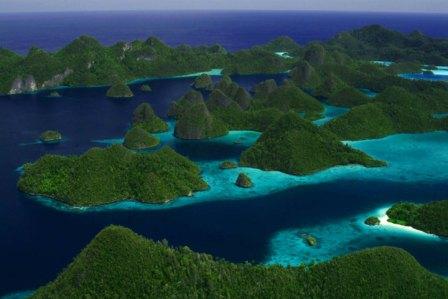
Located off the northwest tip of Bird's Head Peninsula on the island of New Guinea, Raja Ampat, or the Four Kings, is an archipelago comprising over 1,500 small islands, cays and shoals surrounding the four main islands of Misool, Salawati, Batanta and Waigeo. It encompasses more than 9.8 million acres (40,000 km²) of land and sea, which also contains Cenderawasih Bay, the largest marine national park in Indonesia. It is a part of the newly named West Papua (province) of Indonesia which was formerly Irian Jaya.

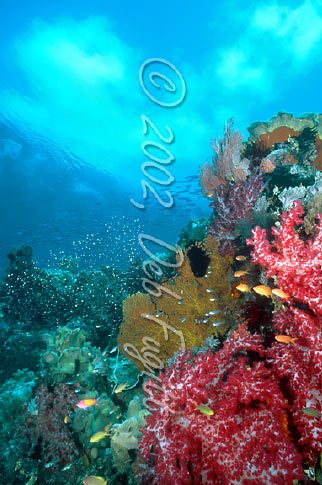
According to Conservation International, marine surveys suggest that the marine life diversity in the Raja Ampat area is the highest recorded on Earth. Diversity is considerably greater than any other area sampled in the Coral Triangle composed of Indonesia, Philippines and Papua New Guinea. The Coral Triangle is the heart of the world's coral reef biodiversity, making Raja Ampat quite possibly the richest coral reef ecosystems in the world.

The area's massive coral colonies along with relatively high sea surface temperatures, also suggest that its reefs may be relatively resistant to threats like coral bleaching and coral disease, which now jeopardise the survival of other coral ecosystems around the world. The Raja Ampat islands are remote and relatively undisturbed by humans.

The high marine diversity in Raja Ampat is strongly influenced by its position between the Indian and Pacific Oceans, as coral and fish larvae are more easily shared between the two oceans. Raja Ampat's coral diversity, resilience, and role as a source for larval dispersal make it a global priority for marine protection.

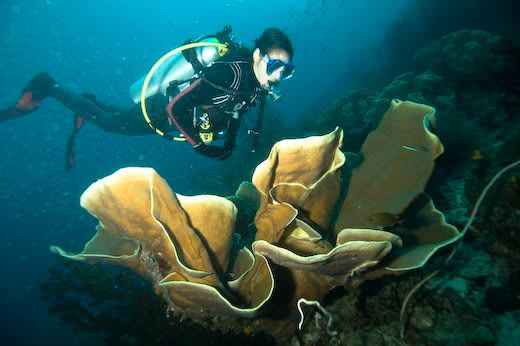
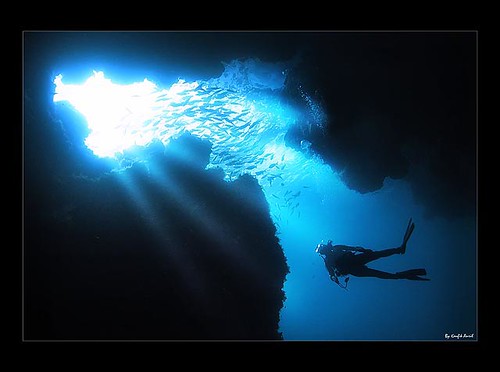
Over 1,070 fish species, 537 coral species (a remarkable 96% of all scleratinia recorded from Indonesia are likely to occur in these islands), and 699 mollusc species, the variety of marine life is staggering.[citation needed] Some areas boast enormous schools of fish and regular sightings of sharks, such as wobbegongs.

Source : Wikipedia.com